To stay up to date on the latest news about Intellia’s technology, pipeline, data releases, and congress presence, sign up to receive email updates from Intellia Medical Affairs.
To stay up to date on the latest news about Intellia’s technology, pipeline, data releases, and congress presence, sign up to receive email updates from Intellia Medical Affairs.
Therapeutic approaches that use genetic medicine include RNA therapies, gene therapy, and gene editing.1
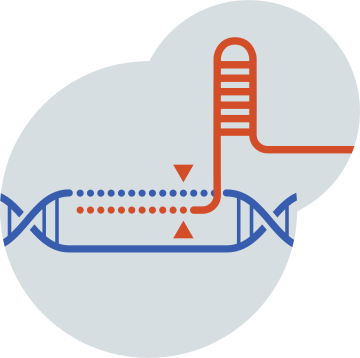
Based on Nobel Prize–winning research, investigational CRISPR-based gene editing therapies have been designed to precisely edit a predefined DNA sequence in a gene known to be associated with a disease.2-4
Learn more about how CRISPR-based gene editing has the potential to address unmet medical needs.
Genes can be edited outside of a patient’s body and reintroduced (ex vivo), or edited directly within the body (in vivo).5
Explore how in vivo CRISPR investigational therapeutic approaches may directly edit genes within the body without the need for extensive immunosuppression or hospitalization, with the goal of treating disease.2,3,6
Hereditary angioedema (HAE) is a genetic disease that causes recurrent, unpredictable, and potentially life-threatening swelling attacks in patients.7-9
Our goal is to equip healthcare professionals with the essential knowledge to understand the science of CRISPR and its potential as a therapeutic option to support informed decision-making.
Visit Intelliatx.com to Learn More About Intellia and Its Product Pipeline.
References
Liu F, et al. MedComm (2020). 2024;5(9):e645.
Gillmore JD, et al. N Engl J Med. 2021;385(6):493-502.
Longhurst HJ, et al. N Engl J Med. 2024;390(5):432-441.
Press release. The Nobel Prize in Chemistry 2020. October 7, 2020. Accessed March 12, 2025.
https://www.nobelprize.org/prizes/chemistry/2020/press-release/
Li H, et al. Signal Transduct Target Ther. 2020;5(1):1.
Longhurst HJ, et al. N Engl J Med. 2024;390(5):432-441 (protocol).
Bork K, et al. J Allergy Clin Immunol. 2012;130(3):692-697.
Farkas H. Allergy Asthma Clin Immunol. 2010;6(1):19.
Mendivil J, et al. Orphanet J Rare Dis. 2021;16(1):94.
Kittleson MM, et al. J Am Coll Cardiol. 2023;81(11):1076-1126.
Adams D, et al. Curr Opin Neurol. 2016;29(suppl 1):S14-S26.
The site you are about to enter is intended for U.S. healthcare professionals.
Please confirm that you are a U.S. healthcare professional.